The Man at Poodle Creek
By late spring, the drive south toward Reedsport begins to soften beneath longer stretches of sunlight filtering through the trees. The mornings arrive in layers of silver fog that hang low between the Douglas firs lining Poodle Creek Road, where the pavement curves through farmland, creek beds, and stretches of forest that seem untouched by urgency. The road feels older than the places it leads to, quiet in a way that makes even a passing truck sound temporary.
Some mornings the sun-kissed fog settles just above the creek itself, drifting between the trees like smoke. Other days, the fields open wide under pale sunlight, green with the blooming of spring. I have driven this road enough times now that I recognize its rhythms—the leaning fences, the flooded ditches after heavy rain, the small barns softened by moss and weather.
And then there is the old man.
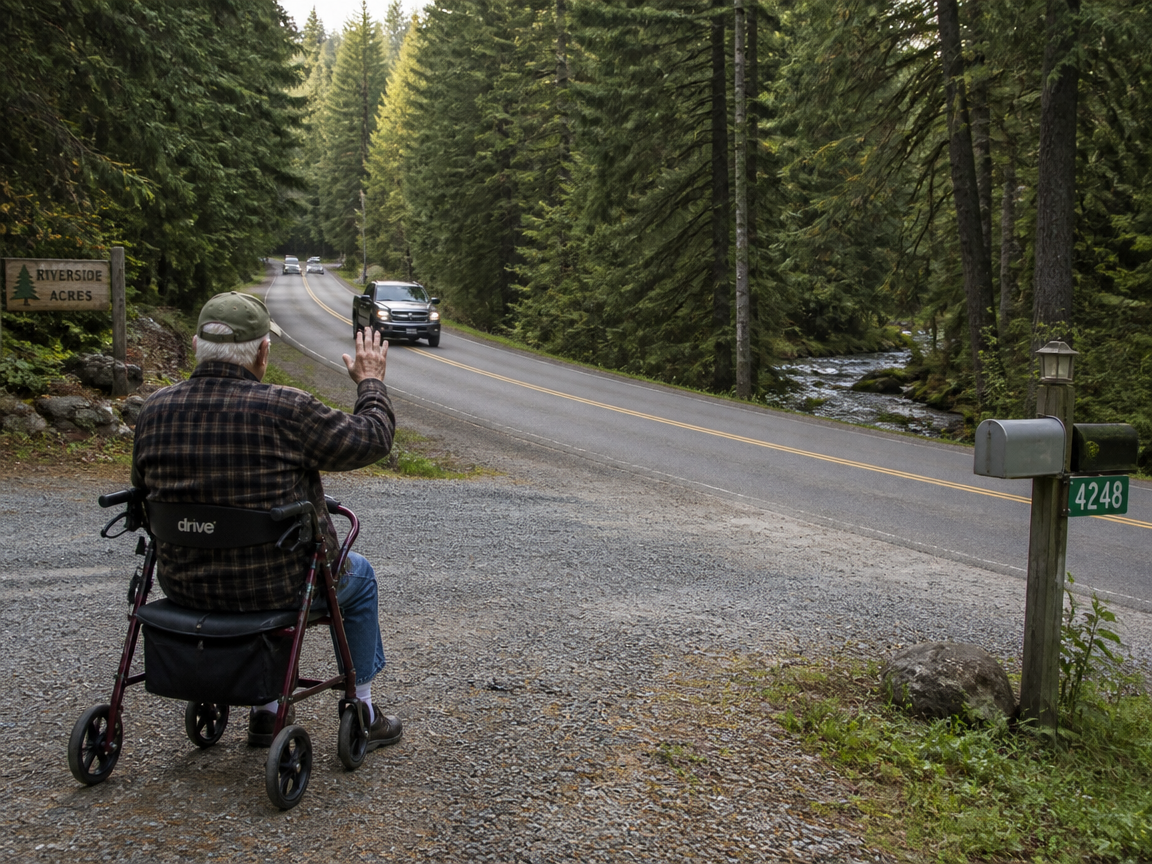
Just before the turnoff toward Highway 126 and the road west to Florence, there is a long gravel driveway cut into the landscape. At its entrance, almost always, sits an elderly man in a walker chair. He faces the road as if he has been expecting someone.
He waves at every passing car.
Not frantically. Not with the exaggerated motion of someone trying to be noticed. His wave is calm, practiced, almost patient. The kind of wave exchanged between neighbors on rural roads, even if you have never met.
I never see anyone stop.
Cars pass in both directions—logging trucks, commuters, tourists heading toward the coast—and still he remains there, lifting his hand toward strangers who disappear moments later around the bend.
The first few times I saw him, I assumed coincidence. But over a few months, he became part of the landscape itself, as familiar as the fir trees and the creek running alongside the road. Now I find myself looking for him long before I reach the driveway.
And every time, I wonder the same thing: should I stop?
Part of me wants to know who he is. I imagine ordinary explanations. Maybe he is lonely. Maybe he likes watching the world move past him from the edge of his property. Maybe waving has become a ritual that gives shape to his mornings. Or maybe there is no larger explanation at all.
But another part of me resists the idea of stopping because I fear understanding him too clearly might somehow diminish the feeling itself.
There is something strangely beautiful about the simplicity of the exchange as it already exists: a man seated beside a rural road, acknowledging strangers who may never see him again after that passing second. No conversation. No biography. Just recognition.
In a culture obsessed with explanation, there is discomfort in leaving something untouched.
I think that may be why the moment lingers with me long after the drive ends. It asks for nothing except attention. Not every meaningful interaction arrives through conversation. Sometimes it exists only in the quiet repetition of being seen, however briefly, by another
person moving through the world.
So I continue driving.
And each time I pass the entrance to that gravel driveway on Poodle Creek Road, I slow slightly without meaning to. I look for the old man in his chair. And when he lifts his hand to wave, I wave back before disappearing west toward the coast.
Some mornings the sun-kissed fog settles just above the creek itself, drifting between the trees like smoke. Other days, the fields open wide under pale sunlight, green with the blooming of spring. I have driven this road enough times now that I recognize its rhythms—the leaning fences, the flooded ditches after heavy rain, the small barns softened by moss and weather.
And then there is the old man.
Just before the turnoff toward Highway 126 and the road west to Florence, there is a long gravel driveway cut into the landscape. At its entrance, almost always, sits an elderly man in a walker chair. He faces the road as if he has been expecting someone.
He waves at every passing car.
Not frantically. Not with the exaggerated motion of someone trying to be noticed. His wave is calm, practiced, almost patient. The kind of wave exchanged between neighbors on rural roads, even if you have never met.
I never see anyone stop.
Cars pass in both directions—logging trucks, commuters, tourists heading toward the coast—and still he remains there, lifting his hand toward strangers who disappear moments later around the bend.
The first few times I saw him, I assumed coincidence. But over a few months, he became part of the landscape itself, as familiar as the fir trees and the creek running alongside the road. Now I find myself looking for him long before I reach the driveway.
And every time, I wonder the same thing: should I stop?
Part of me wants to know who he is. I imagine ordinary explanations. Maybe he is lonely. Maybe he likes watching the world move past him from the edge of his property. Maybe waving has become a ritual that gives shape to his mornings. Or maybe there is no larger explanation at all.
But another part of me resists the idea of stopping because I fear understanding him too clearly might somehow diminish the feeling itself.
There is something strangely beautiful about the simplicity of the exchange as it already exists: a man seated beside a rural road, acknowledging strangers who may never see him again after that passing second. No conversation. No biography. Just recognition.
In a culture obsessed with explanation, there is discomfort in leaving something untouched.
I think that may be why the moment lingers with me long after the drive ends. It asks for nothing except attention. Not every meaningful interaction arrives through conversation. Sometimes it exists only in the quiet repetition of being seen, however briefly, by another
person moving through the world.
So I continue driving.
And each time I pass the entrance to that gravel driveway on Poodle Creek Road, I slow slightly without meaning to. I look for the old man in his chair. And when he lifts his hand to wave, I wave back before disappearing west toward the coast.
